

Youth frustration is becoming an important psychological and social issue among modern young people facing unemployment, examination pressure, uncertainty, and disappointment.
A student spends years preparing for an examination. Forms are filled. Coaching classes are attended. Dreams are built around a single opportunity. Then a paper leak occurs. The examination is cancelled. Recruitment is delayed. Another year passes.
A few hours later, the same student shares a meme online and laughs.
At first glance, it appears to be simple humor. Yet behind that joke may exist disappointment, frustration, uncertainty, and emotional exhaustion.
This is why satire-based online communities have become so popular among modern youth. Concepts such as the fictional “Cockroach Janta Party” (CJP) are humorous on the surface, but psychologically they represent something much deeper. They reflect the emotional condition of a generation that is struggling with unemployment, academic pressure, social comparison, economic uncertainty, and a growing feeling of being unheard.
This is why satire-based online communities have become so popular among modern youth. Concepts such as the fictional “Cockroach Janta Party” (CJP) are humorous on the surface, but psychologically they represent something much deeper. They reflect the emotional condition of a generation that is struggling with unemployment, academic pressure, social comparison, economic uncertainty, and a growing feeling of being unheard.
Table of Contents
ToggleThe Psychology of Youth Frustration

Youth frustration is traditionally viewed as a period of ambition, growth, exploration, and hope. It is the stage when people begin imagining their future careers, identities, and life goals.
However, for many young people today, this period is increasingly associated with uncertainty.
Students face intense competition. Entrance examinations become more difficult every year. Government vacancies may be limited. Recruitment processes can take years. Economic pressures continue to rise.
When effort repeatedly fails to produce expected results, frustration naturally develops.
Psychologist John Dollard’s Frustration-Aggression Theory suggests that when individuals repeatedly encounter obstacles that block important goals, frustration emerges. Over time, this frustration may transform into anger, cynicism, emotional withdrawal, or resentment.
Imagine a student who studies for years for a competitive examination. If the examination is delayed repeatedly or cancelled due to administrative issues, the student experiences more than academic disappointment. The event may challenge their belief in fairness, effort, and future success.
Repeated setbacks often create:
- Emotional exhaustion
- Self-doubt
- Reduced motivation
- Distrust toward institutions
- Feelings of helplessness
For many young people, the problem is not a single failure. It is the accumulation of disappointments over time.
This emotional burden creates fertile ground for satire and humor. When direct solutions appear unavailable, humor becomes one of the few accessible forms of emotional expression.
Sometimes people laugh the hardest at the problems that hurt them the most.
Why Humor Becomes a Survival Tool
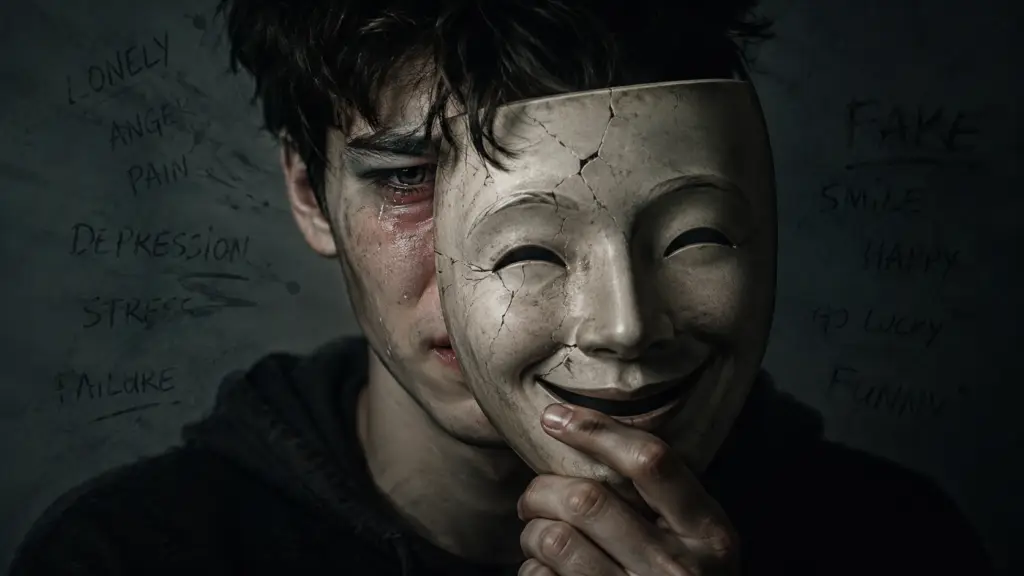
One of the most important psychological explanations behind satire communities is the role of humor as a defense mechanism.
According to Sigmund Freud, humor allows people to release emotional tension safely. Instead of directly expressing fear, anger, or sadness, individuals transform those emotions into jokes.
This process helps reduce psychological stress.
Consider common internet jokes:
- Degree completed. Career loading forever.
- Professionally unemployed.
- Emotionally available only for memes.
These statements appear humorous, yet they often represent genuine emotional experiences.
Humor creates psychological distance from pain. A difficult reality becomes slightly easier to tolerate when it is transformed into a joke.
For many young people, memes function as emotional first aid.
They do not solve problems. They do not create jobs. They do not eliminate uncertainty.
However, they provide temporary relief.
When thousands of people laugh at the same meme, they are participating in a shared emotional experience. They are silently communicating:
“We understand this struggle.”
That feeling of being understood is psychologically powerful.
The Rise of Digital Communities and Collective Identity
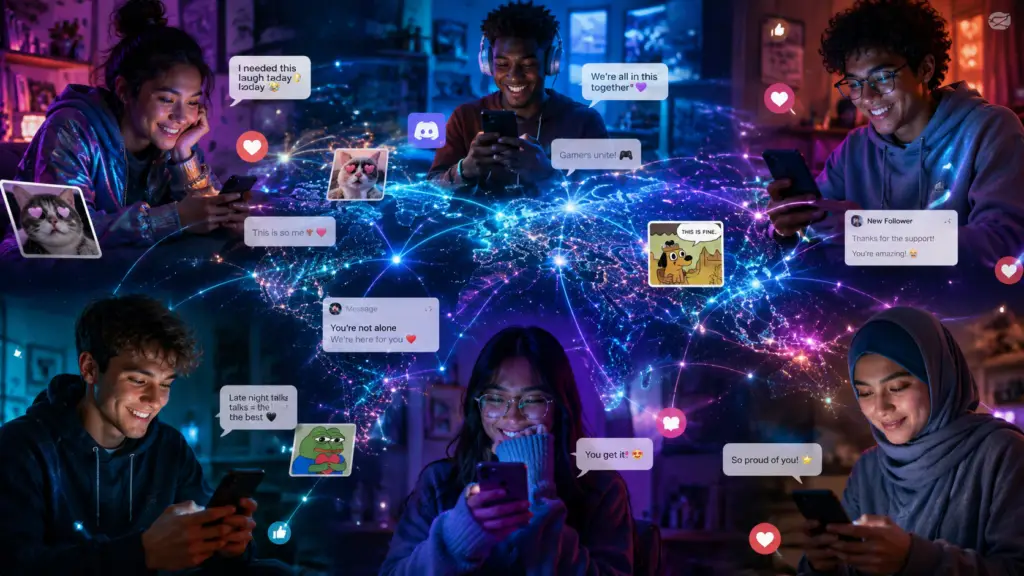
Modern youth increasingly form identities online.
In previous generations, identity was often shaped through family, religion, neighborhood communities, or traditional organizations.
Today, digital platforms play a major role in social belonging.
Young people connect through:
- Meme pages
- Online forums
- Gaming communities
- Fan cultures
- Satire groups
- Social media movements
Psychologist Abraham Maslow identified belongingness as one of humanity’s fundamental psychological needs.
People want to feel accepted. They want to feel understood. They want to feel that they are not struggling alone.
This helps explain why satire communities become emotionally attractive.
A student who feels isolated in real life may join an online group and discover thousands of others facing similar experiences.
The realization is powerful:
“I am not alone.”
Psychologist Henri Tajfel’s Social Identity Theory suggests that individuals derive part of their self-esteem from group membership.
Even a humorous community can provide:
- Emotional validation
- Social support
- Shared identity
- Reduced loneliness
This is why internet communities often feel more emotionally meaningful than outsiders expect.
Social Media, Comparison, and Emotional Pressure
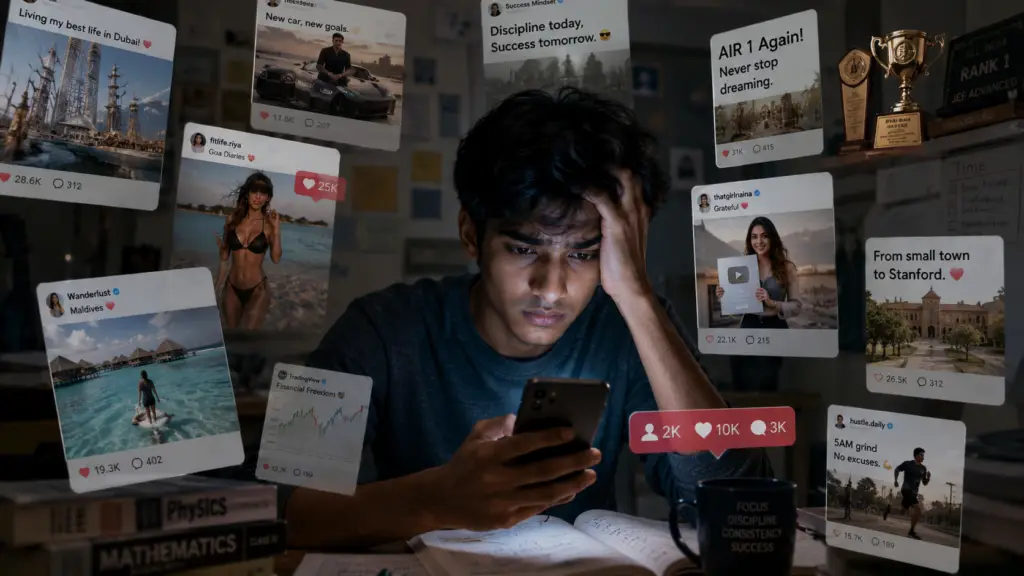
Social media has transformed human psychology.
Every day, young people are exposed to:
- Success stories
- Luxury lifestyles
- Career achievements
- Political debates
- Viral controversies
- Influencer culture
While these platforms create opportunities for learning and connection, they also increase social comparison.
A student struggling financially may see others displaying success online.
A job seeker may constantly encounter stories of people earning large incomes.
A young person dealing with uncertainty may compare themselves to carefully curated images of achievement.
Psychologically, this creates dissatisfaction.
Research consistently shows that excessive social comparison can contribute to:
- Lower self-esteem
- Anxiety
- Stress
- Feelings of inadequacy
Social media algorithms further intensify emotional experiences because emotionally charged content receives more attention.
Anger spreads quickly.
Outrage spreads quickly.
Humor spreads quickly.
As a result, memes and satire become highly effective methods of communication.
A single meme can communicate complex emotions more efficiently than a lengthy discussion.
Political Distrust and Psychological Alienation

Another important factor behind satire culture is political alienation.
Political alienation occurs when individuals feel disconnected from institutions and leadership.
Young people may begin feeling politically alienated when they believe their concerns are not being adequately addressed.
Common concerns include:
- Employment opportunities
- Education quality
- Economic insecurity
- Corruption
- Administrative inefficiency
When individuals repeatedly feel unheard, distrust grows.
Psychologically, distrust often leads to:
- Cynicism
- Frustration
- Anger
- Withdrawal
- Skepticism
Historically, political dissatisfaction was expressed through protests, speeches, or organized movements.
Today, a significant portion of political expression occurs through digital culture.
Memes have become modern political commentary.
Satire allows people to criticize systems while maintaining humor.
This makes satire psychologically attractive because it provides emotional expression without requiring formal political participation.
The Psychology of Dark Humor
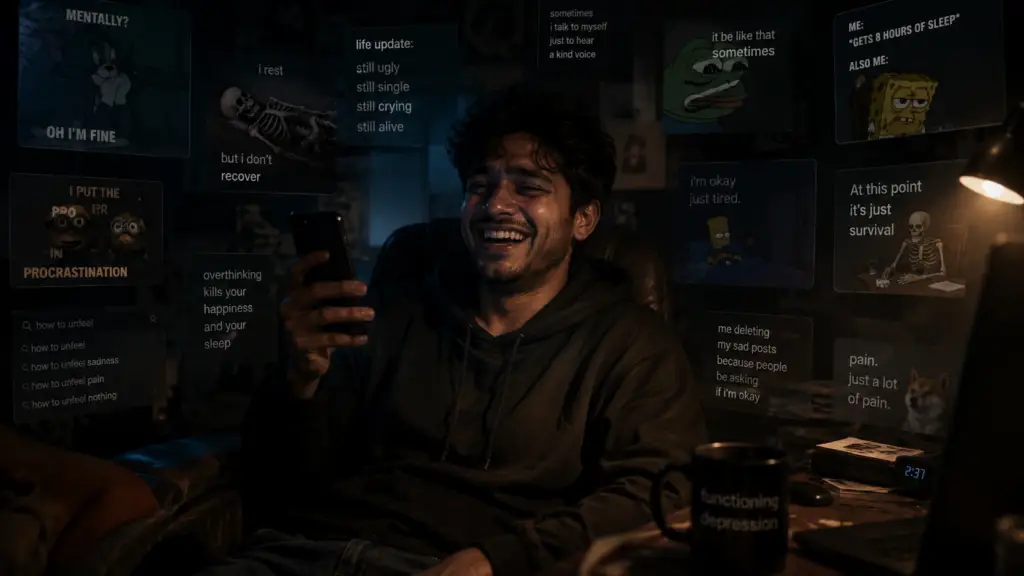
Dark humor has become a defining feature of internet culture.
Many young people joke about:
- Unemployment
- Loneliness
- Academic stress
- Financial difficulties
- Emotional struggles
To outsiders, these jokes may appear strange.
Psychologically, however, dark humor often functions as a coping strategy.
When people face situations that feel overwhelming, humor can reduce emotional intensity.
Dark humor provides a sense of control.
If individuals can laugh at a problem, they temporarily feel less powerless against it.
However, dark humor also has limitations.
While it can provide relief, it cannot replace genuine emotional support, problem-solving, or social change.
Humor helps people survive difficult experiences.
It does not automatically resolve them.
The Dopamine Cycle of Memes and Outrage
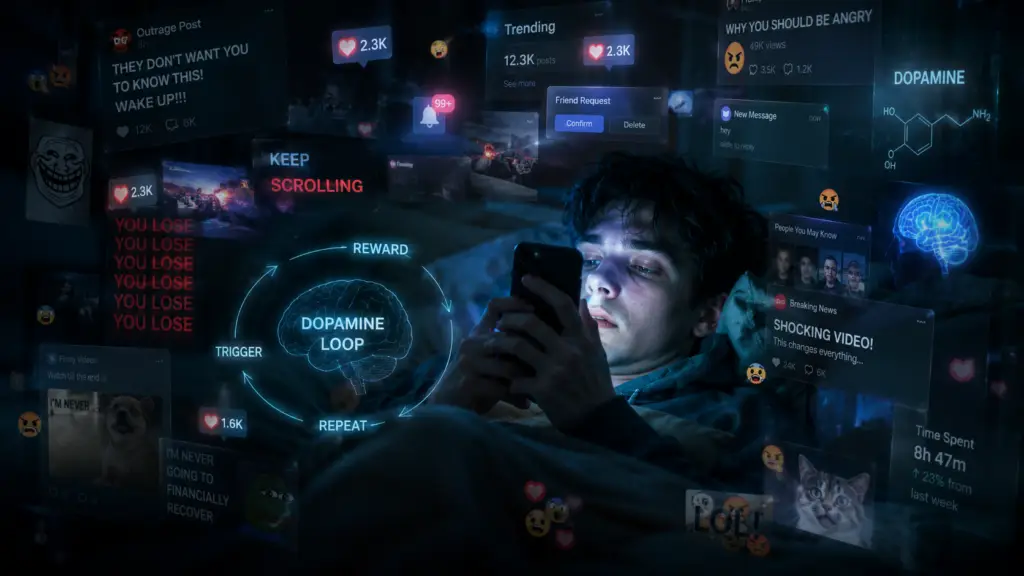
Modern digital platforms are designed to capture attention.
Every notification, like, comment, and share provides a small burst of psychological reward.
This reward is often associated with dopamine, a neurotransmitter involved in motivation and reward processing.
As a result, many people become trapped in cycles of:
- Endless scrolling
- Outrage consumption
- Viral controversy
- Meme sharing
This phenomenon is often called doomscrolling.
The more emotionally intense the content becomes, the harder it is to stop consuming it.
This creates a paradox.
People may feel emotionally exhausted by online content while simultaneously feeling compelled to continue engaging with it.
Satire communities often thrive within this environment because they combine humor with emotional intensity.
They provide both entertainment and emotional validation.
Constructive Rebellion Versus Destructive Cynicism

Psychology distinguishes between healthy criticism and destructive cynicism.
Constructive rebellion involves:
- Questioning authority responsibly
- Seeking solutions
- Raising awareness
- Encouraging reform
Destructive cynicism involves:
- Believing nothing can improve
- Rejecting all possibilities
- Spreading hopelessness
- Remaining trapped in negativity
The difference is important.
Frustration itself is not harmful.
In many cases, frustration motivates social progress.
Problems arise when frustration transforms into permanent hopelessness.
Psychologist Martin Seligman’s concept of learned helplessness helps explain this danger.
When people repeatedly experience disappointment, they may eventually stop believing that effort matters.
This mindset can reduce motivation and resilience.
Healthy communities help individuals move from frustration toward empowerment.
They encourage awareness while preserving hope.
Why Youth Need Validation
One of the strongest human psychological needs is validation.
People want their experiences to be acknowledged.
A student struggling with uncertainty does not always need immediate solutions.
Sometimes they simply need someone to recognize that their struggles are real.
This is one reason satire communities become so popular.
They communicate:
- Your frustration is real.
- Your disappointment is understandable.
- Your emotions make sense.
Validation reduces loneliness.
It reminds people that they are not isolated in their experiences.
In many cases, the emotional success of satire communities comes not from their humor but from their ability to make people feel seen.
The Future of Youth Political Psychology

The psychology of political participation is evolving rapidly.
Future youth movements are likely to rely increasingly on:
- Digital activism
- Online communities
- Memes
- Satire
- Emotional storytelling
The boundary between entertainment and political expression continues to blur.
Memes are no longer simply jokes.
They are becoming a cultural language.
They communicate frustration, identity, resistance, and hope.
The challenge for future generations will be ensuring that emotional expression eventually leads to constructive engagement.
Awareness without action risks becoming endless frustration.
Action without awareness risks becoming ineffective.
Both are necessary.
Beyond Memes and Frustration

The Cockroach Janta Party may appear to be nothing more than an internet joke.
Yet psychologically it reflects deeper realities about modern youth.
Behind the humor often exist:
- Frustration
- Uncertainty
- Loneliness
- Emotional exhaustion
- Social pressure
- A desire for recognition
Satire communities provide emotional relief, social belonging, and validation for many individuals navigating an increasingly complex world.
At the same time, psychology reminds us that humor alone cannot solve structural challenges.
Memes can expose problems.
Satire can highlight frustrations.
Jokes can create emotional connection.
But meaningful change ultimately requires awareness, resilience, participation, and action.
Modern youth are not simply angry internet users.
They are a generation searching for opportunity, dignity, purpose, understanding, and hope.
The real question is not why young people joke so much.
The real question is why so many feel emotionally unheard.
“The real question is not why young people joke so much. The real question is why so many feel emotionally unheard.”



Pingback: The Struggles Students Face with Paper Leaks and Exams