
Artificial Intelligence VS Human Intelligence is one of the biggest debates of the modern world. From classrooms and hospitals to businesses and everyday life, this comparison is changing how we think about technology and the future of humanity.
Not too long ago, the idea of a machine writing stories, diagnosing diseases, creating artwork, or answering difficult questions sounded like science fiction. Today, it has become part of our everyday lives. Artificial Intelligence is quietly working behind the scenes whenever we unlock our phones, watch movies online, shop on the internet, or ask a virtual assistant for help.
Because of this rapid progress, one question keeps coming up:
Is Artificial Intelligence becoming smarter than humans?
It’s a fair question. AI can process huge amounts of information in just a few seconds. It never gets tired, doesn’t lose focus, and can perform repetitive tasks with incredible accuracy. These abilities have made AI one of the biggest technological breakthroughs of our time.
But intelligence isn’t only about working fast or remembering millions of facts.
Think about a teacher who inspires a student to believe in themselves. A doctor who comforts a worried patient before surgery. A parent who understands their child’s feelings without a single word. Or an artist who creates something completely original from imagination.
Those moments involve qualities that can’t simply be programmed into a machine.
That’s what makes the debate between Artificial Intelligence and Human Intelligence so interesting.
The real question isn’t whether AI is powerful it clearly is. The bigger question is whether intelligence can truly exist without emotions, empathy, imagination, self-awareness, and real-life experiences.
Before comparing AI with humans, let’s first understand what Artificial Intelligence actually means.
Table of Contents
ToggleWhat Is Artificial Intelligence?
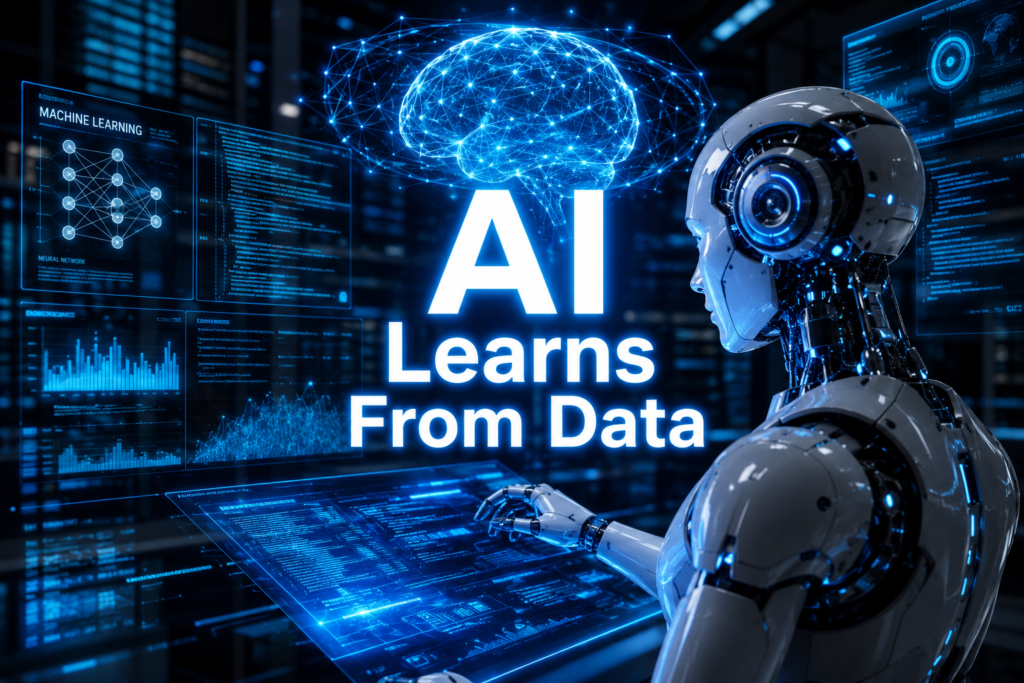
Artificial Intelligence, commonly known as AI, is a field of computer science that focuses on building machines and software capable of performing tasks that normally require human intelligence. These tasks include understanding language, recognizing images, translating text, solving problems, making predictions, and learning from data.
Unlike traditional computer programs that simply follow fixed instructions, modern AI systems improve by analyzing large amounts of information. The more useful data they receive, the better they become at performing specific tasks.
You probably use AI every single day without even realizing it.
When Netflix recommends a movie you’ll likely enjoy, when Google predicts what you’re searching for, or when your phone unlocks using facial recognition, AI is doing the work behind the scenes.
It’s also helping doctors detect diseases earlier, assisting banks in spotting fraudulent transactions, supporting farmers in monitoring crops, and improving customer service across many industries.
These everyday examples show why discussions about Artificial Intelligence VS Human Intelligence have become more important than ever.
Still, AI has one major limitation.
It doesn’t understand the world the way humans do.
A machine can recognize that someone in a photograph is smiling, but it doesn’t actually know what happiness feels like. It can write about love, fear, or hope, yet it never experiences those emotions itself.
And that difference changes everything.
How Does Artificial Intelligence Learn?
Humans and AI learn in completely different ways.
People learn through experiences, relationships, observations, emotions, and mistakes. AI, on the other hand, learns by studying data.
Engineers train AI systems using thousands or sometimes millions of examples. Over time, the system begins to recognize patterns and improve its accuracy.
Imagine teaching a child what a dog is.
The child may pet the dog, hear it bark, play with it, and form an emotional memory of the experience.
An AI system doesn’t experience any of that. Instead, it analyzes thousands of images of dogs until it learns the common patterns that identify one. It recognizes shapes, colors, and features—but it doesn’t know what it feels like to care for a pet.
This simple example highlights one of the biggest differences between Artificial Intelligence and Human Intelligence.
Humans learn from life.
AI learns from data.
Both approaches are powerful, but they are fundamentally different.
What Is Human Intelligence?
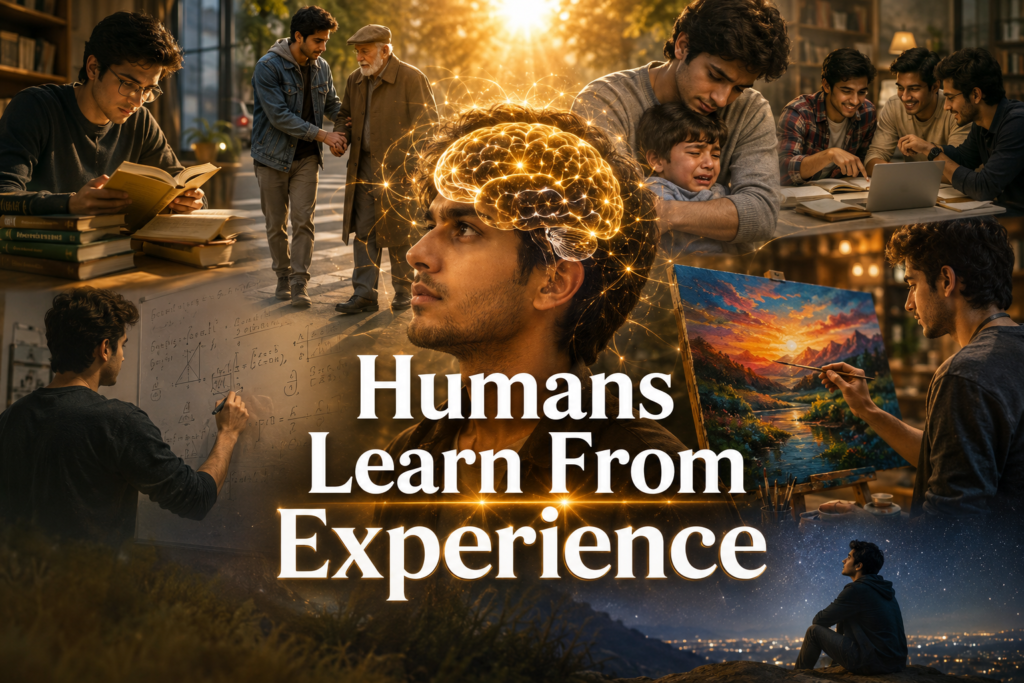
Human intelligence is the natural ability to think, learn, understand, communicate, imagine, solve problems, adapt to new situations, and make decisions using both knowledge and emotions.
No one is born knowing everything.
Every success, failure, conversation, challenge, and life experience gradually shapes the way we think and understand the world.
That’s why two people can read the same book and come away with completely different ideas. Their experiences, beliefs, and emotions influence how they interpret what they’ve read.
Human intelligence goes far beyond memory or logical thinking.
It includes creativity, empathy, emotional understanding, social awareness, critical thinking, adaptability, and the ability to make decisions even when there isn’t a perfect answer.
This is why comparing Artificial Intelligence with Human Intelligence isn’t as simple as comparing a computer with the human brain.
AI is excellent at processing information.
Humans give that information meaning.
And that ability to understand, imagine, and feel is one of the reasons human intelligence continues to be unique.
The Human Brain
Whenever people compare Artificial Intelligence vs Human Intelligence, one question almost always comes up:
If AI is becoming so powerful, what still makes the human brain unique?
The answer isn’t just intelligence it’s consciousness.
The human brain does far more than store information or solve problems. It’s where our memories live, where emotions are felt, where ideas are born, and where our personality takes shape. Every decision we make is influenced by our experiences, relationships, values, and emotions.
Scientists estimate that the human brain contains around 86 billion neurons, all connected through an incredibly complex network. What’s even more remarkable is that these connections continue to change throughout our lives. Every new experience teaches us something, helping us adapt, grow, and become better versions of ourselves.
Unlike machines, people don’t learn only from facts.
We learn from success and failure. From love and heartbreak. From curiosity, mistakes, challenges, and even quiet moments that leave a lasting impact.
That’s what makes the human brain so extraordinary.
Artificial Intelligence VS Human Intelligence
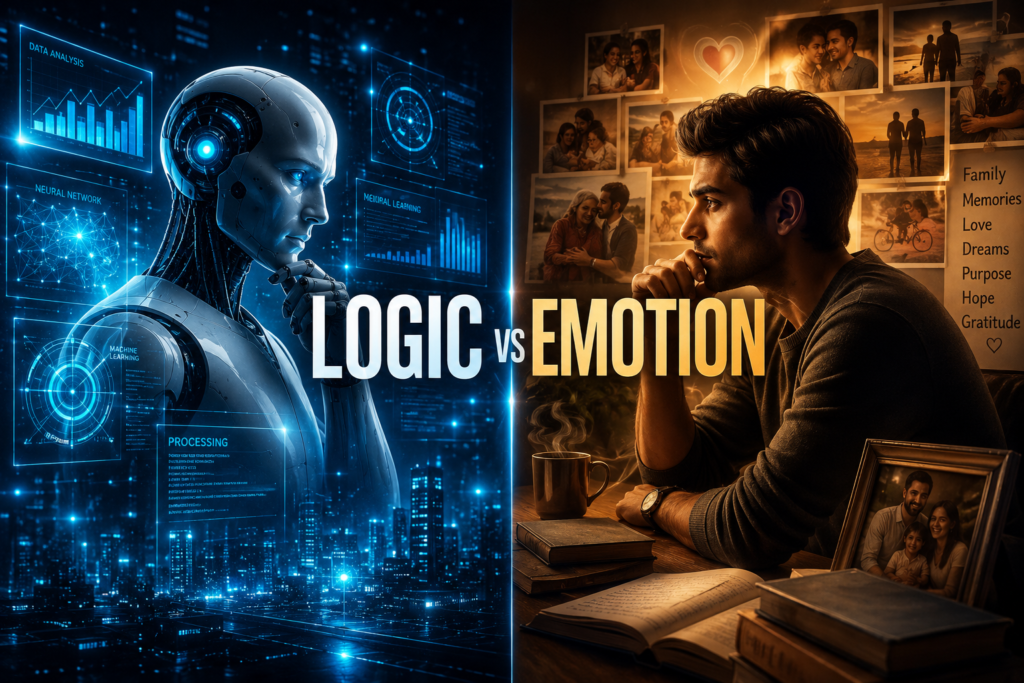
Many people assume that AI is gradually becoming the same as human intelligence.
In reality, they work in completely different ways.
Both can solve problems and process information, but the way they reach conclusions couldn’t be more different.
1. Learning
Artificial Intelligence learns by analyzing data.
Humans learn by living life.
An AI model improves after studying millions of examples. A person, however, can change their entire perspective because of a single conversation, a difficult experience, or one unforgettable moment.
That’s a difference no amount of computing power can easily replace.
2. Creativity
AI can write articles, compose music, generate artwork, and even create stories.
But it does all of this by recognizing patterns from existing information.
Human creativity works differently.
People imagine things that have never existed before. Great inventions, timeless novels, groundbreaking discoveries, and beautiful works of art all begin with imagination—not just data.
Creativity is one of the strongest reminders that intelligence is more than processing information.
3. Emotions
One of the greatest strengths of human intelligence is the ability to feel.
People celebrate.
People grieve.
People forgive.
People fall in love.
AI can recognize emotions in words or facial expressions, but it doesn’t actually experience happiness, sadness, fear, hope, or compassion.
And those emotions influence many of the most important decisions we make.
4. Decision-Making
Artificial Intelligence relies on calculations, statistics, and probabilities.
Humans use logic too—but they also rely on experience, ethics, intuition, emotions, and personal values.
Imagine a doctor speaking to someone facing a serious illness.
Medical knowledge helps explain the condition.
Compassion helps the patient face it.
That human balance between knowledge and empathy is something algorithms still cannot truly replicate.
Can Artificial Intelligence Ever Think Like Humans?
This question has fascinated scientists and researchers for many years.
AI can already perform tasks that once seemed impossible. It writes code, translates languages, answers complex questions, summarizes long documents, and even assists researchers in making new discoveries.
Yet there is one important difference.
AI doesn’t know that it is thinking.
It has no self-awareness.
It has no childhood memories.
It has no dreams, ambitions, or personal fears.
Everything it produces comes from patterns it has learned from data.
Humans are different.
We reflect on our past.
We worry about tomorrow.
We imagine possibilities that don’t yet exist.
That ability to think beyond information continues to separate human intelligence from artificial intelligence.
Why Human Emotions Still Matter Most
Imagine sitting beside a close friend who has just lost someone they love.
An AI system can generate kind and comforting words.
A real friend can do something much deeper.
They may sit quietly without saying anything.
They may hold your hand.
They may share memories that make you smile through your tears.
Sometimes, simply being present says more than words ever could.
This is empathy one of the most valuable qualities of human intelligence.
Empathy cannot be installed like software or learned overnight.
It grows through relationships, life experiences, struggles, kindness, and genuine human connection.
That’s why the discussion about Artificial Intelligence VS Human Intelligence isn’t really about choosing one over the other.
It’s about understanding that they serve different purposes.
AI brings speed, efficiency, and incredible computing power.
Humans bring meaning, compassion, creativity, and emotional understanding.
Technology will continue to evolve.
But the qualities that make us human remain impossible to measure with algorithms alone.
Real-Life of Artificial Intelligence VS Human Intelligence
The best way to understand the difference between Artificial Intelligence and Human Intelligence isn’t through complicated definitions it’s through everyday life.
Whether we realize it or not, AI has become part of our daily routine. It suggests what we should watch on YouTube, recommends movies on Netflix, predicts what we’re about to type on Google, helps banks detect unusual transactions, and finds the quickest route when we use navigation apps.
Most of the time, it works quietly in the background.
Now imagine a completely different situation.
A little child is learning to ride a bicycle for the first time. After a few attempts, the child falls and starts crying. The father doesn’t just explain how to keep balance. He comforts the child, encourages another attempt, and celebrates the moment the child finally rides without support.
That experience is about much more than solving a problem.
It’s about encouragement, trust, love, and shared memories.
No machine can genuinely experience or understand those emotions.
That’s why the comparison between Artificial Intelligence and Human Intelligence is about much more than technology. It’s also about the human experiences that shape who we are.
Artificial Intelligence and Human Intelligence in Healthcare
Healthcare is one of the best examples of how humans and AI can complement each other.
Today, AI can examine thousands of X-rays, CT scans, and medical records within seconds. It helps doctors identify diseases earlier, recognize patterns that might otherwise be missed, and support faster diagnosis.
But medicine isn’t only about reports and test results.
When someone receives difficult news about their health, they need more than accurate information.
They need someone who will listen patiently, explain the treatment clearly, answer difficult questions, and offer reassurance during one of the most stressful moments of their life.
AI can provide valuable medical insights.
A doctor provides understanding, compassion, and hope.
When both work together, patients receive the best possible care.
Can Artificial Intelligence Be Truly Creative?
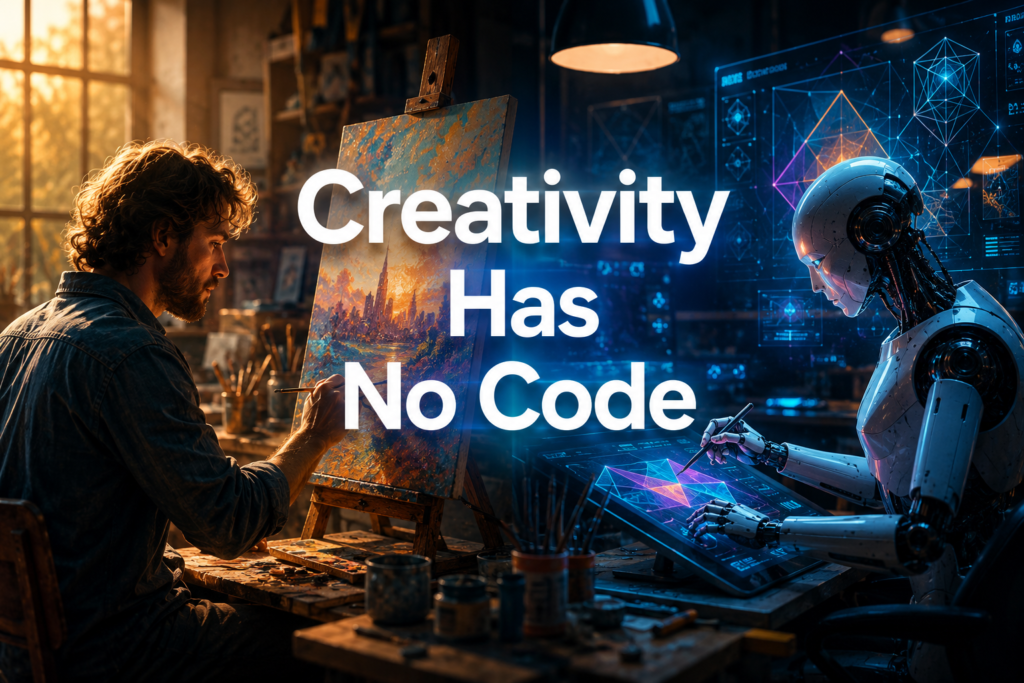
AI has become surprisingly good at creating things.
It can write stories, compose music, generate artwork, design logos, and even create realistic images in just a few seconds.
But there’s an important difference.
Everything AI creates is based on patterns it has learned from existing data.
Human creativity often begins somewhere much deeper.
- A painting inspired by childhood memories.
- A poem written after heartbreak.
- A song born from personal struggles.
These creations come from real emotions and life experiences, not just information.
That’s one of the reasons creativity continues to be one of the biggest differences between Artificial Intelligence and Human Intelligence.
Machines generate content.
Humans create meaning.
Common Sense: A Human Ability Machines Still Struggle With
One quality that often goes unnoticed in discussions about AI is common sense.
People naturally understand situations they’ve never encountered before.
Imagine you’re walking down the street and notice an elderly person struggling to carry heavy shopping bags.
Without thinking much, many people instinctively offer help.
- No instruction manual is needed.
- No database is searched.
The human brain combines observation, empathy, experience, and judgment almost instantly.
AI can respond well to situations it has been trained to recognize, but understanding unexpected social situations with genuine common sense remains a major challenge.
That’s why researchers continue working on ways to make AI better at understanding the world the way humans naturally do.
Will Artificial Intelligence Replace Human Intelligence?
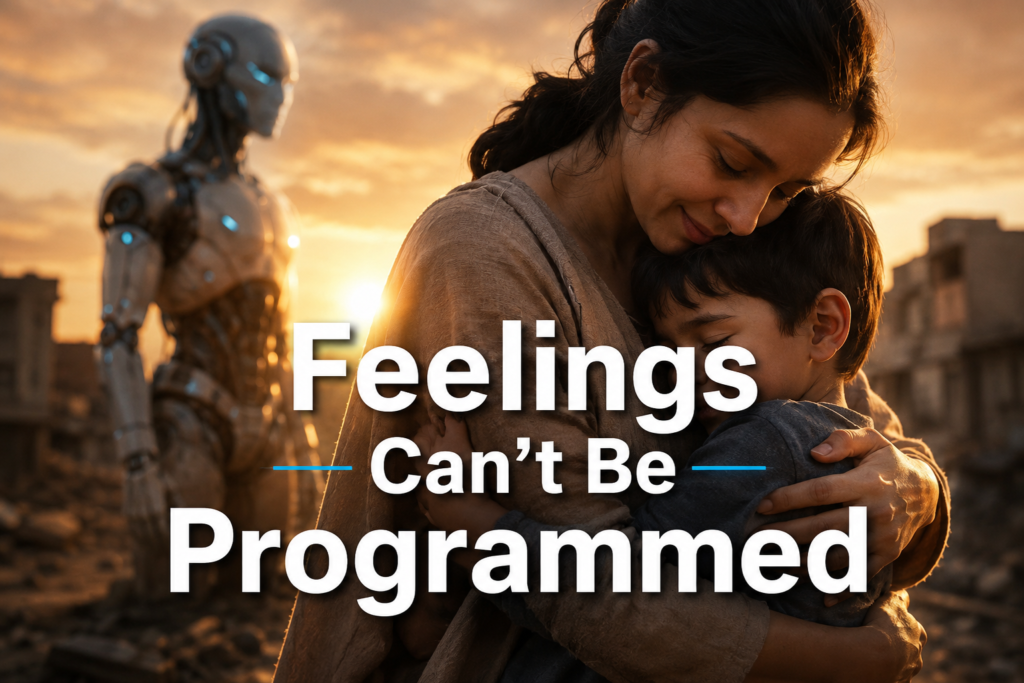
This is one of the most common questions people ask whenever AI is discussed.
The simple answer is probably not.
What AI is far more likely to do is change the way we work.
- History gives us many examples.
- Calculators didn’t replace mathematicians.
- Computers didn’t replace teachers.
The internet didn’t replace books.
Instead, each of these technologies changed how people learned, worked, and solved problems.
Artificial Intelligence is expected to do the same.
It will take over many repetitive tasks, improve efficiency, help professionals make better decisions, and save valuable time.
But qualities like creativity, empathy, critical thinking, communication, ethics, and emotional understanding will continue to belong primarily to people.
The future won’t belong only to those who know AI.
It will belong to those who know how to combine the power of Artificial Intelligence with the unique strengths of Human Intelligence.
The Future of Artificial Intelligence VS Human Intelligence
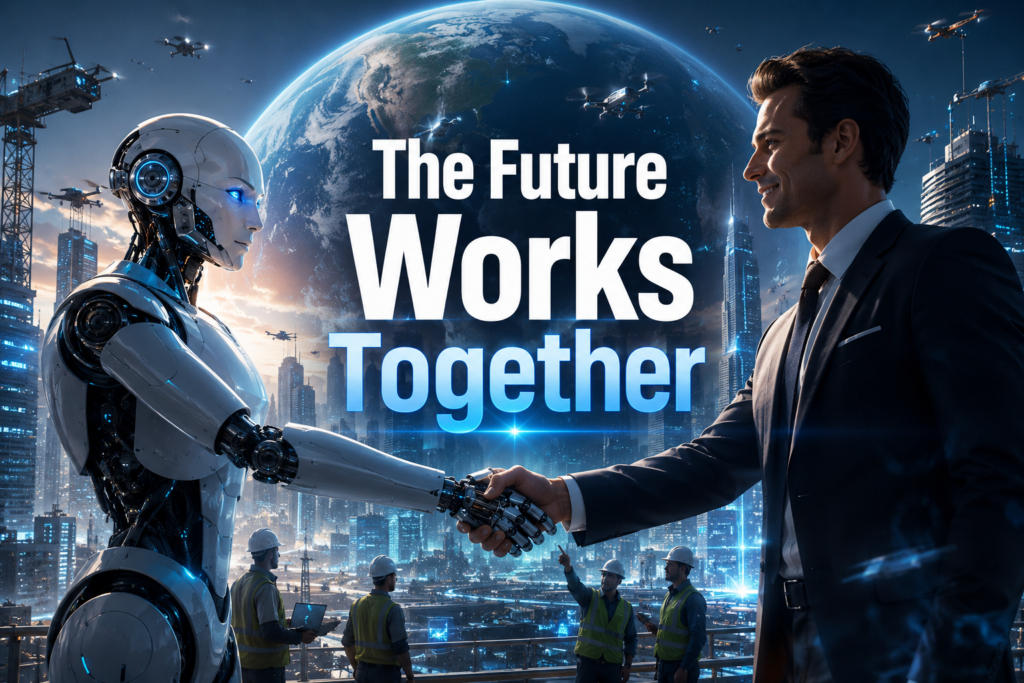
The future is not a competition between humans and machines. It is about how wisely we use technology while preserving the qualities that make us human.
Every major technological revolution has changed the way people live and work. The internet changed communication. Smartphones changed daily life. Now, Artificial Intelligence is changing how we learn, create, and make decisions.
In the coming years, Artificial Intelligence VS Human Intelligence will become even more important because AI will continue to enter new industries. From education and healthcare to finance, agriculture, transportation, and scientific research, AI will help people solve problems faster than ever before.
However, no matter how advanced AI becomes, it will still require Human Intelligence to set goals, establish ethical boundaries, and make decisions that affect society.
Technology can provide answers.
Only humans can decide which answers are right.
That is why the future of Artificial Intelligence VS Human Intelligence is not about replacement it is about collaboration.
Why Humans Will Always Have an Advantage
Artificial Intelligence can become faster.
It can become more accurate.
It can process more information.
But there are qualities that continue to make humans unique.
Curiosity.
The desire to ask questions that nobody has asked before.
Empathy.
The ability to understand another person’s emotions without needing data.
Creativity.
The courage to imagine ideas that have never existed.
Moral Judgment.
Knowing that the smartest decision is not always the right decision.
These qualities cannot simply be downloaded into a machine.
This is why the discussion around Artificial Intelligence VS Human Intelligence continues to inspire psychologists, neuroscientists, educators, and technology experts across the world.
Key Takeaways: Artificial Intelligence VS Human Intelligence
Before we reach the final conclusion, here are the most important points to remember:
Artificial Intelligence learns from data, while Human Intelligence learns from experience.
Artificial Intelligence performs repetitive and data-driven tasks with exceptional speed and accuracy.
Human Intelligence combines logic, emotions, creativity, ethics, intuition, and social understanding.
AI can assist doctors, teachers, engineers, researchers, and businesses, but it cannot genuinely replace empathy or human relationships.
The future of Artificial Intelligence VS Human Intelligence will depend on cooperation rather than competition.
People who combine technological skills with emotional intelligence and creative thinking will be better prepared for the future.
Conclusion
The debate over Artificial Intelligence VS Human Intelligence is not about deciding who is stronger. It is about understanding that both forms of intelligence have different strengths and different purposes.
Artificial Intelligence has already transformed industries by making work faster, more accurate, and more efficient. It is helping scientists discover new medicines, supporting doctors in diagnosing diseases, improving education, and solving problems that once seemed impossible.
At the same time, Human Intelligence remains the driving force behind innovation, compassion, imagination, and ethical responsibility. Every great invention begins with human curiosity. Every meaningful relationship is built on empathy. Every breakthrough starts with someone willing to ask a new question.
The future will not belong to AI alone, nor to humans working without technology.
The future belongs to people who understand how to combine the power of Artificial Intelligence VS Human Intelligence to solve real-world challenges, improve lives, and create a better world for future generations.
Rather than fearing technology, we should focus on learning, adapting, and using it responsibly. When Artificial Intelligence VS Human Intelligence work together, they become far more powerful than either could ever be alone.
FAQs
What is the biggest difference between Artificial Intelligence and Human Intelligence?
The biggest difference in Artificial Intelligence VS Human Intelligence is how they learn and make decisions. Artificial Intelligence depends on data, algorithms, and patterns, while Human Intelligence relies on experience, emotions, creativity, reasoning, and ethical judgment.
Can Artificial Intelligence replace Human Intelligence?
No. Artificial Intelligence can automate many tasks and improve efficiency, but it cannot replace human qualities such as empathy, imagination, moral reasoning, and consciousness. That is why Artificial Intelligence VS Human Intelligence is about collaboration rather than replacement.
Is Artificial Intelligence more intelligent than humans?
AI is faster than humans in processing large amounts of information and performing repetitive tasks. However, Human Intelligence remains superior in creativity, emotional understanding, adaptability, and complex decision-making.
Why is Human Intelligence still important?
Human Intelligence is essential because society depends on empathy, leadership, innovation, ethics, and meaningful relationships. These qualities cannot be fully replicated by machines, making Artificial Intelligence VS Human Intelligence an ongoing partnership instead of a rivalry.
What is the future of Artificial Intelligence VS Human Intelligence?
The future of Artificial Intelligence VS Human Intelligence lies in working together. AI will continue to automate routine work and support decision-making, while humans will provide creativity, emotional intelligence, leadership, and ethical direction.