
Why does motivation fade so quickly, even when we start with full energy and excitement?
Have you ever felt extremely motivated on Day 1 — ready to change your life, start the gym, study seriously, or build a new habit — only to feel completely drained after a few days?
You are not lazy.
You are not weak.
And you are definitely not alone.
Motivation fading quickly is a psychological pattern, not a personality flaw. Many people misunderstand motivation as something permanent, when in reality it is temporary and emotion-driven.
In this article, we’ll explore:
- Why motivation fades
- What happens in the brain
- The psychology behind inconsistency
- The difference between motivation and discipline
- And how to maintain long-term drive
Table of Contents
ToggleWhat Is Motivation, Really?
why does motivation fade is the psychological force that:
- Pushes you to start
Energizes action - Creates excitement
- Builds initial momentum
But here’s the truth:
Motivation is emotional energy — not a stable system.
It is often triggered by:
- Inspiration
- Fear
- Comparison
- New beginnings
- Strong emotions
That’s why motivation feels intense at the beginning — and weak later.
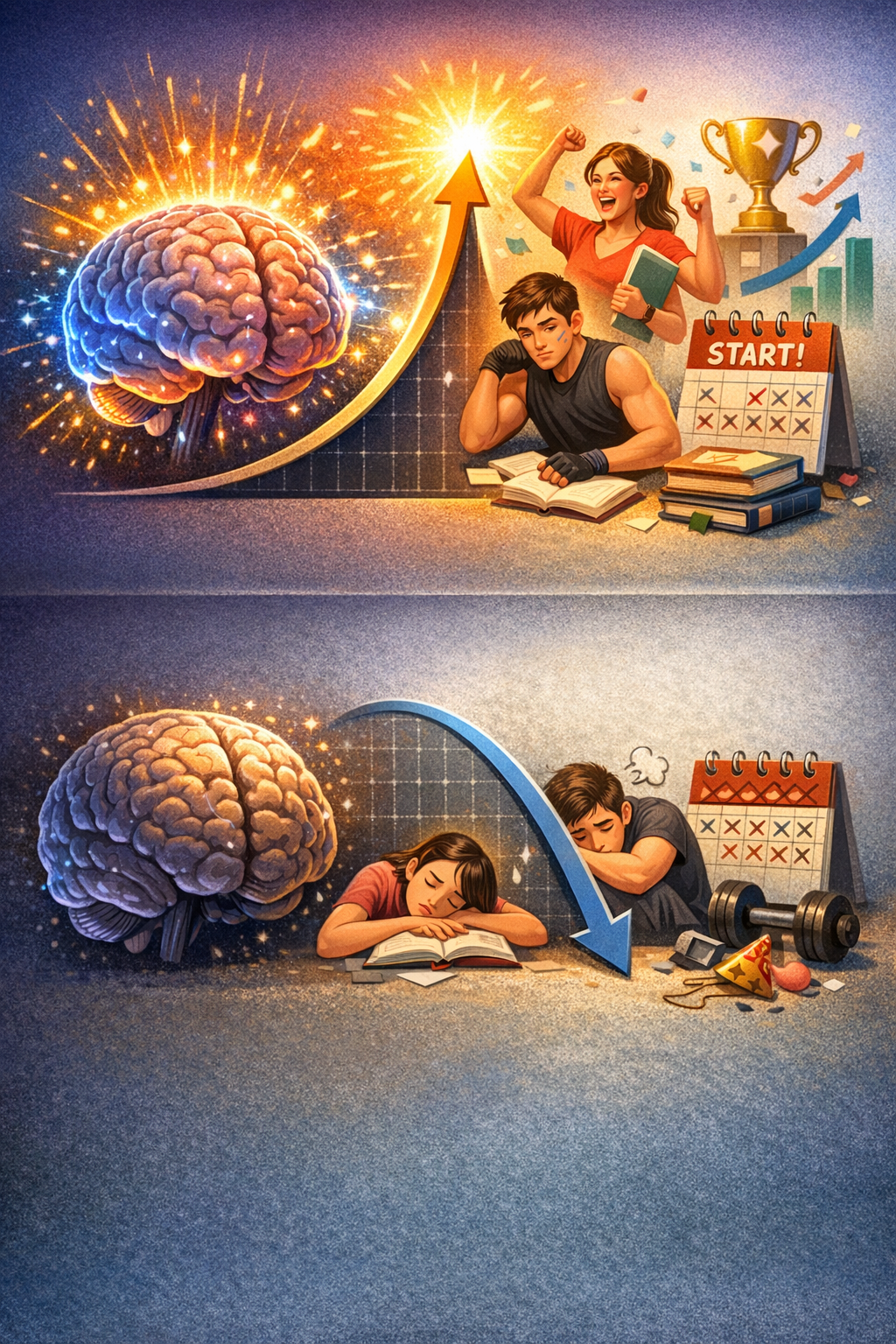
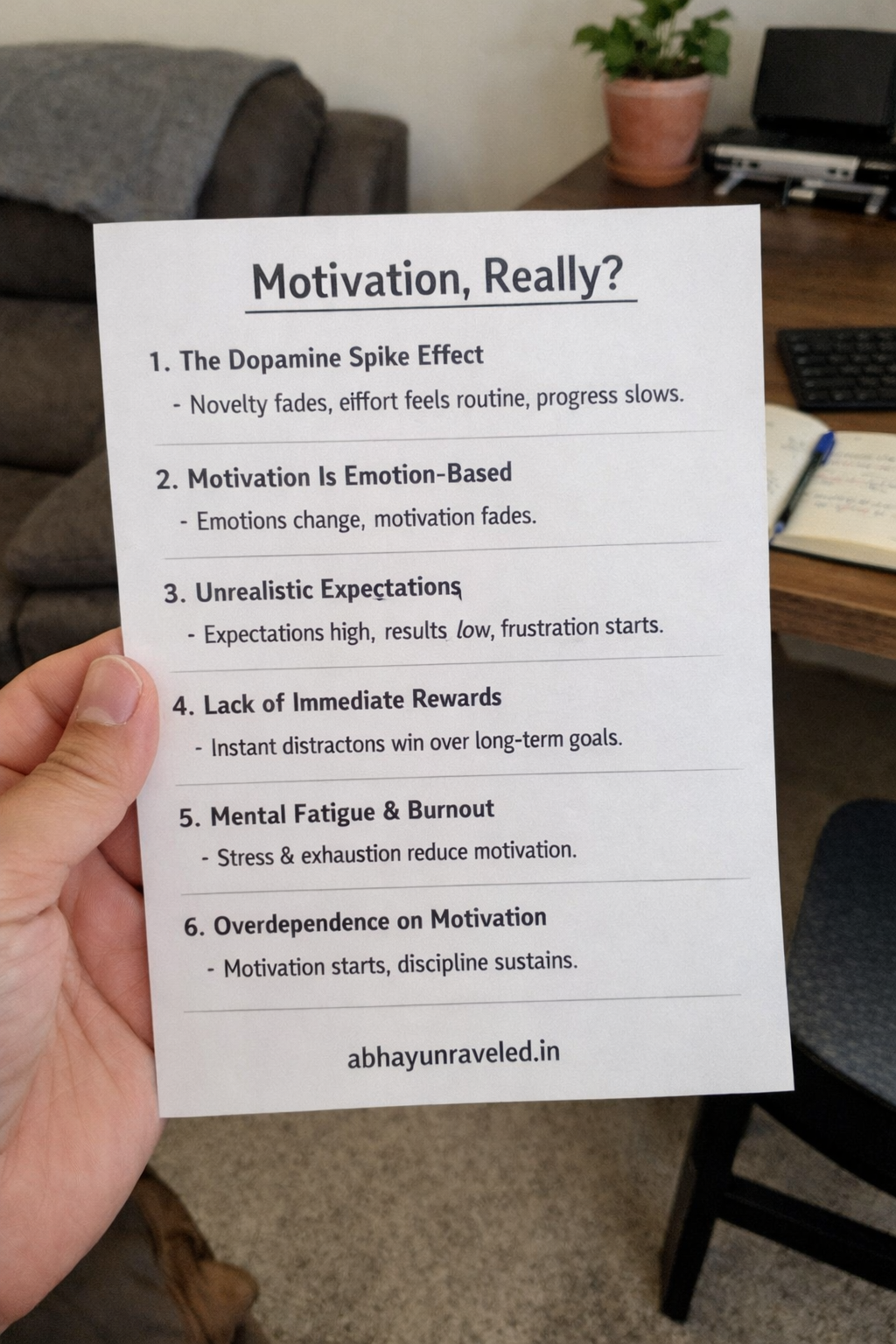
1. The Dopamine Spike Effect
When you start something new:
- The brain releases dopamine (the reward chemical)
- Excitement increases
- Future success feels close
This is called a dopamine spike.
However, dopamine decreases once:
- Novelty fades
- Effort becomes routine
- Progress slows
When dopamine drops, motivation drops.
That’s why does motivation fade:
- Gym enthusiasm fades after a week
- Study plans collapse after initial excitement
- New Year resolutions disappear by February
Your brain loves novelty — not repetition.
2. Motivation Is Emotion-Based
why does motivation fade is often connected to emotion.
Example:
- You watch an inspiring video → you feel motivated.
- You attend a seminar → you feel energized.
- You compare yourself to someone successful → you feel driven.
But emotions are temporary.
When emotion fades, motivation fades.
This is why does motivation fade people say:
“I don’t feel like doing it today.”
Because they confuse feeling motivated with being committed.
3. Unrealistic Expectations
Many people start with unrealistic goals:
- “I will wake up at 5 AM every day.”
- “I will study 8 hours daily.”
- “I will quit all bad habits immediately.”
When results don’t match expectations:
- Frustration begins
- Confidence drops
- Motivation disappears
Psychology calls this the expectation-reality gap.
When progress feels slower than imagined, the brain loses interest.
4. Lack of Immediate Rewards
The human brain prefers immediate rewards over delayed rewards.
Scrolling social media:
- Instant dopamine
Working on long-term goals:
- Delayed dopamine
Because long-term goals don’t provide quick rewards, the brain sees them as less exciting.
This is why does motivation fade:
- Distractions win
- Comfort wins
- Procrastination wins
Motivation fades when reward feels far away.
5. Mental Fatigue and Burnout
Motivation requires mental energy.
If you are:
- Stressed
- Sleep-deprived
- Emotionally overwhelmed
- Overworked
your brain conserves energy by reducing motivation.
This is not laziness.
It is a self-protection mechanism.
Burnout makes even simple tasks feel heavy.
6. Overdependence on Motivation
One major psychological mistake is waiting to “feel motivated.”
But high achievers do not rely on motivation.
They rely on systems.
If you wait for motivation:
- Action becomes optional
- Inconsistency increases
- Goals remain incomplete
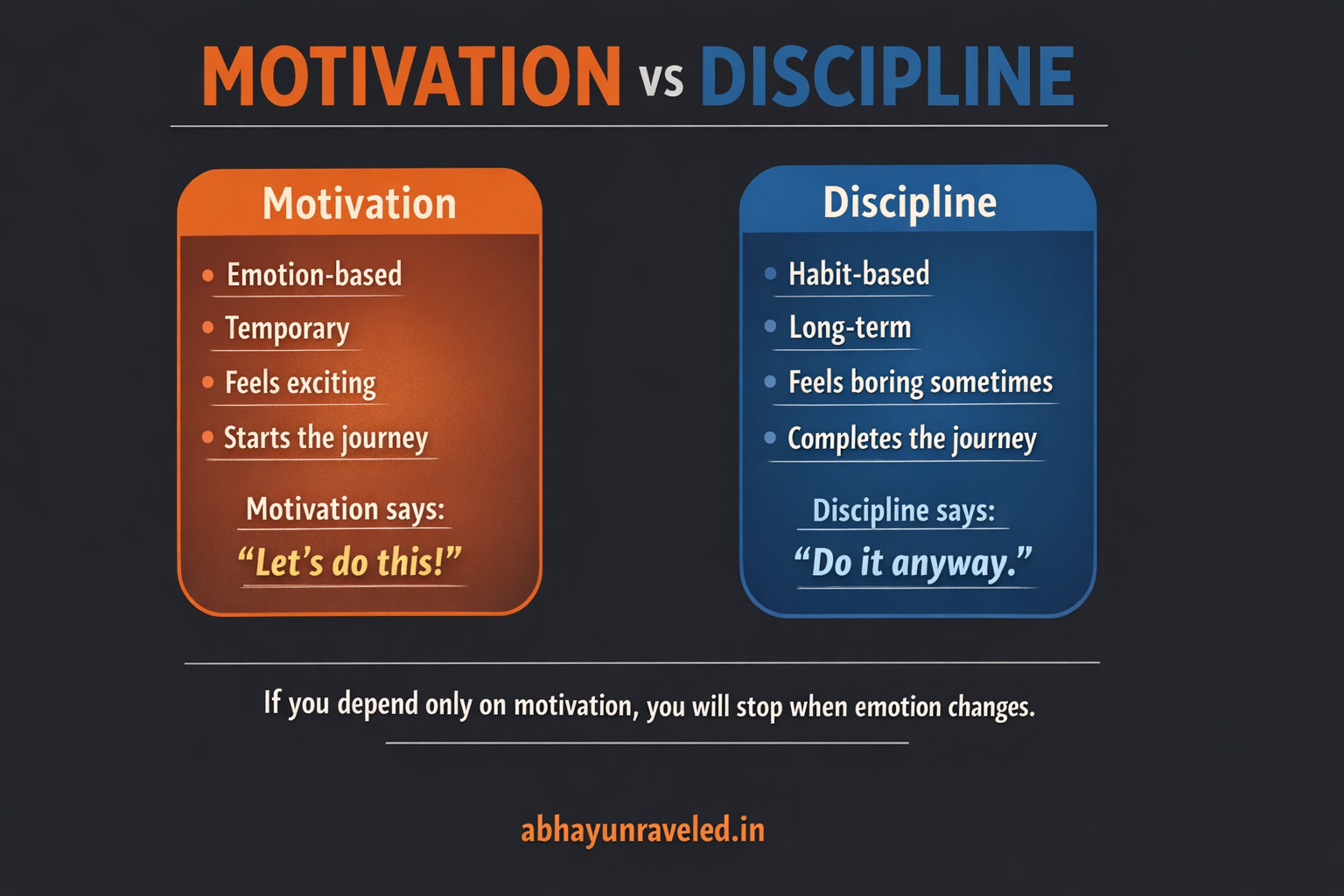
Motivation starts action.
Discipline sustains it.
Why Does Motivation Fade After a Few Days?
Many people wonder why does motivation fade after the initial excitement disappears. The answer lies in brain chemistry and emotional dependency.
What Happens in the Brain?
why does motivation fade involves:
- Dopamine system (reward)
- Prefrontal cortex (planning & control)
When dopamine drops and the brain perceives effort as painful:
- Procrastination increases
- Excuses increase
- Motivation decreases
The brain naturally prefers comfort over effort.
That’s normal biology.
Who Struggles Most With Fading Motivation?
People who:
- Are highly emotional
- Seek instant results
- Struggle with consistency
- Depend on inspiration
- Compare themselves frequently
Ironically, highly ambitious people also struggle because they aim high but lack systems.
How to Maintain Motivation Long-Term
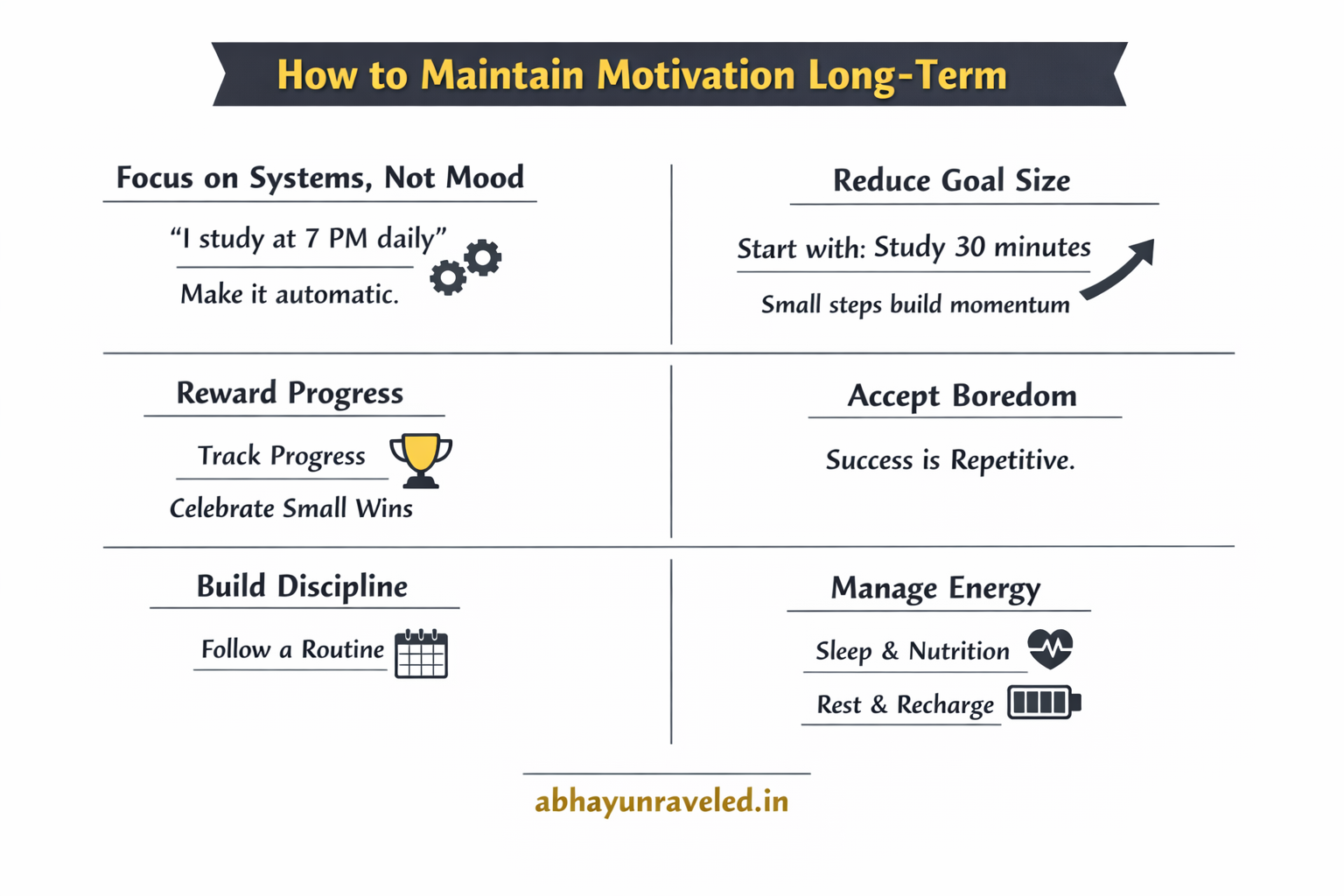
1. Focus on Systems, Not Mood
Instead of:
“I will study when I feel motivated.”
Say:
“I study at 7 PM daily.”
Make it automatic.
2. Reduce Goal Size
Big goals create pressure.
Small goals create momentum.
Instead of:
- “Study 5 hours”
Start with: - “Study 30 minutes.”
Consistency builds confidence.
3. Reward Progress
Train your brain.
After completing tasks:
- Track progress
- Celebrate small wins
This maintains dopamine levels.
4. Accept Boredom
Long-term growth is boring sometimes.
Success is repetitive.
If you expect excitement every day, you will quit early.
5. Build Discipline Through Routine
Routine reduces decision fatigue.
Less decision-making = less mental exhaustion.
6. Manage Energy, Not Just Time
Sleep, nutrition, and mental rest are critical.
Low energy = low motivation.
The Truth About Motivation
Motivation fading does not mean:
- You don’t care
- You are lazy
- You lack potential
It means:
- Your brain is wired for comfort
- Your system needs adjustment
- Your expectations need balance
Long-term success comes from:
- Consistency
- Systems
- Discipline
- Realistic pacing
Not emotional highs.
Conclusion
why does motivation fade feels powerful — but it is not reliable.
It is like a spark.
It helps you begin, but it cannot keep the fire burning forever.
The real secret is understanding this:
You don’t need to feel motivated every day.
You need to act despite not feeling motivated.
When you shift from chasing inspiration to building systems, everything changes.
why does motivation fade —
but discipline, routine, and small daily action will always move you forward.
And that is the psychology of long-term success.
Yes. Motivation is temporary by design.
No. But habits and discipline can be permanent.
Usually until novelty fades — which can be days or weeks.
Usually until novelty fades — which can be days or weeks.
What is better: motivation or discipline?

One thought on “Why Does Motivation Fade So Quickly? The Psychology Behind It”