Have you ever avoided an opportunity — not because you lacked ability, but because you were afraid of failing?
- Maybe you didn’t apply for that job.
- Maybe you delayed starting that project.
- Maybe you quit before even trying.
That silent force holding you back is called the fear of failure.
Fear of failure is one of the most powerful psychological barriers to growth. It doesn’t just stop action — it affects confidence, motivation, decision-making, and long-term success.
In this article, we’ll explore:
- Why we are afraid of failure
- The psychology behind this fear
- What happens in the brain
- How it affects behavior
- And how to overcome fear of failure effectively
Table of Contents
ToggleWhat Is Fear of Failure?
Fear of failure is the emotional resistance to situations where there is a possibility of not succeeding.
It often sounds like:
- “What if I mess up?”
- “What will people think?”
- “What if I’m not good enough?”
This fear is not always loud. Sometimes it appears as:
- Procrastination
- Overthinking
- Perfectionism
- Self-doubt
- Quitting early
Fear of failure doesn’t mean you’re weak.
It means your brain is trying to protect you from emotional pain.
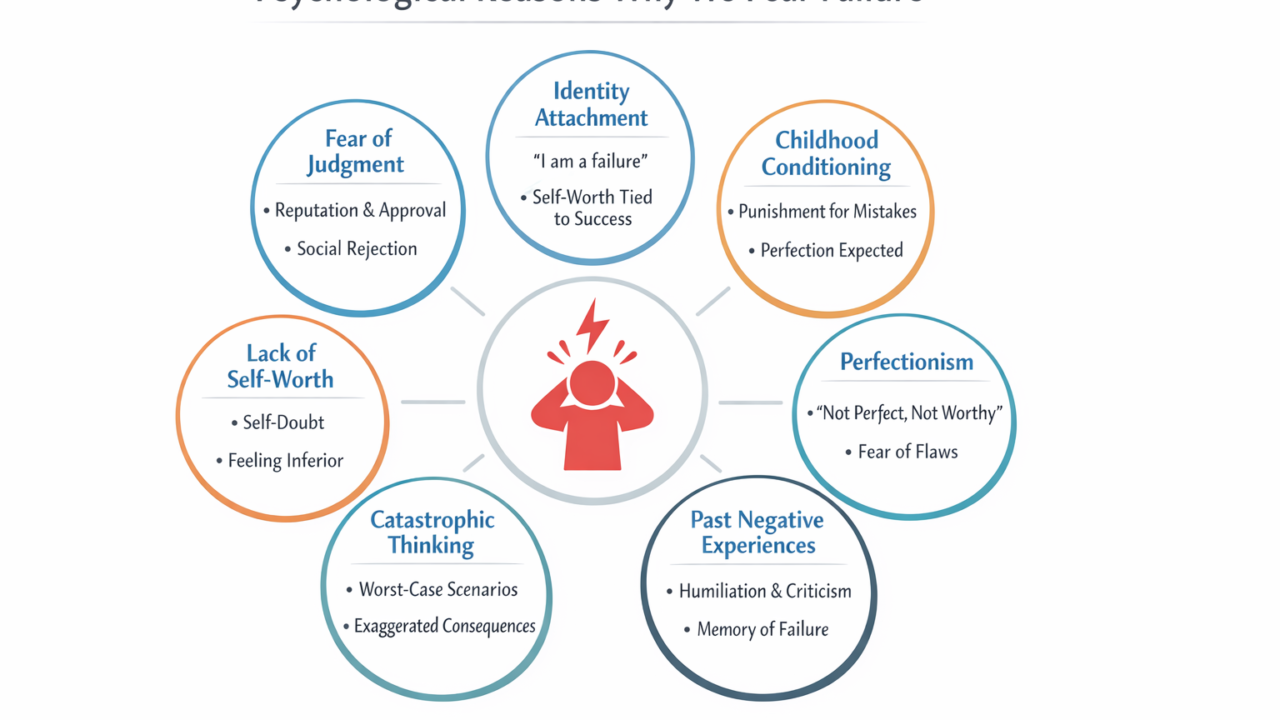
Psychological Reasons Why We Fear Failure
1. Fear of Judgment
One major reason why we are afraid of failure is social judgment.
Humans are social beings. We care about:
- Reputation
- Approval
- Status
Failure feels like public embarrassment.
The brain interprets social rejection as a threat — almost like physical danger.
So instead of risking embarrassment, we avoid action.
2. Identity Attachment
Many people attach success to their identity.
They believe:
“If I fail, I am a failure.”
This is dangerous.
Failure becomes not an event — but a label.
When identity is attached to outcome, fear increases.
3. Childhood Conditioning
Some people grow up in environments where:
- Mistakes were punished
- Failure was criticized
- Perfection was expected
Over time, the brain learns:
Failure = danger.
This belief continues into adulthood.
4. Perfectionism
Perfectionism and fear of failure are closely connected.
Perfectionists think:
“If it’s not perfect, it’s worthless.”
“I must not make mistakes.”
Because perfection is impossible, action becomes scary.
Instead of risking imperfection, they delay or avoid.
5. Past Negative Experiences
If someone experienced:
- Humiliation
- Criticism
- Rejection
- Public failure
The brain stores it as emotional memory.
Next time a similar situation appears, fear activates automatically.
The brain says:
“Don’t repeat that pain.”
6. Catastrophic Thinking
Catastrophic thinking makes failure seem bigger than it is.
Example:
- One exam failure = “My life is ruined.”
- One rejection = “I will never succeed.”
The brain exaggerates consequences.
This distortion increases fear.
7. Lack of Self-Worth
People with low self-worth fear failure more intensely.
Why?
Because they already doubt themselves.
Failure feels like confirmation of their negative beliefs.
What Happens in the Brain During Fear of Failure?
Fear activates the amygdala, the brain’s fear center.
When the amygdala is triggered:
- Stress hormones increase
- Logical thinking decreases
- Avoidance behavior increases
The brain prioritizes safety over growth.
That’s why you:
- Delay
- Overthink
- Make excuses
It’s biology — not laziness.
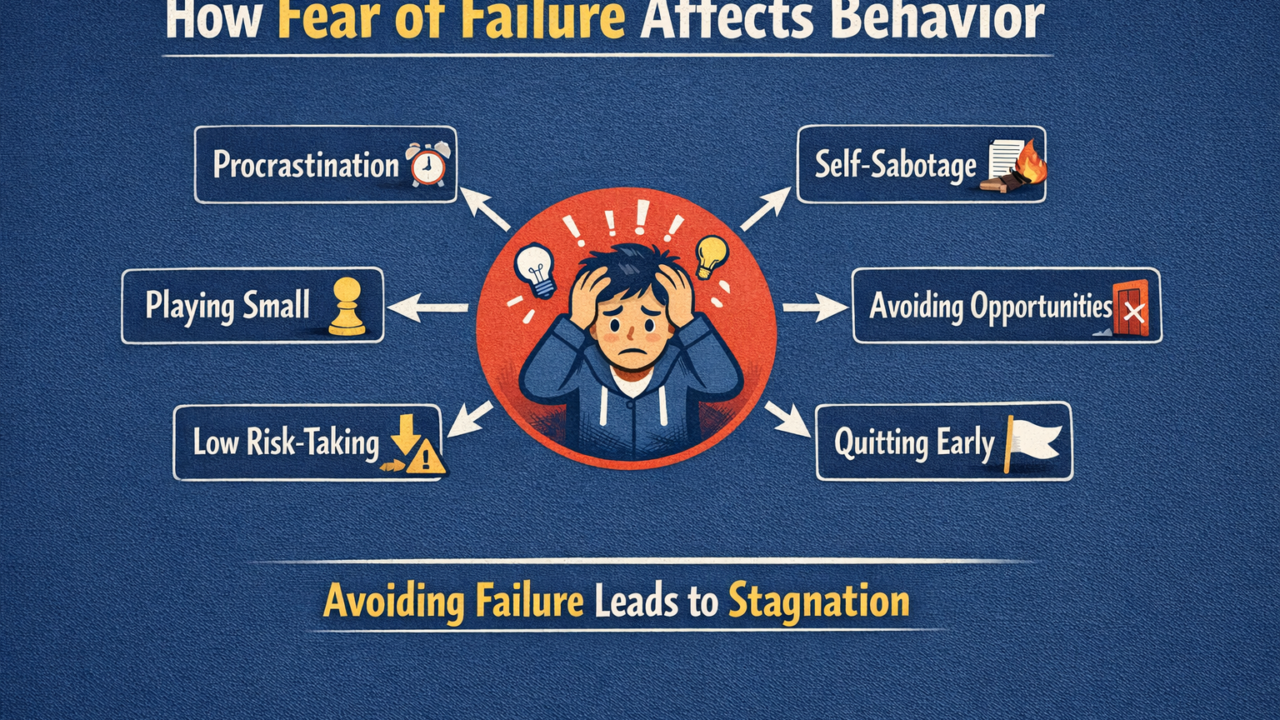
How Fear of Failure Affects Behavior
Fear of failure can lead to:
- Procrastination
- Self-sabotage
- Avoiding opportunities
- Quitting early
- Low risk-taking
- Playing small
Ironically, avoiding failure often guarantees stagnation.
How to Overcome Fear of Failure
1. Separate Identity from Outcome
Instead of:
“I failed, so I am a failure.”
Say:
“I failed at this attempt.”
Failure is an event — not identity.
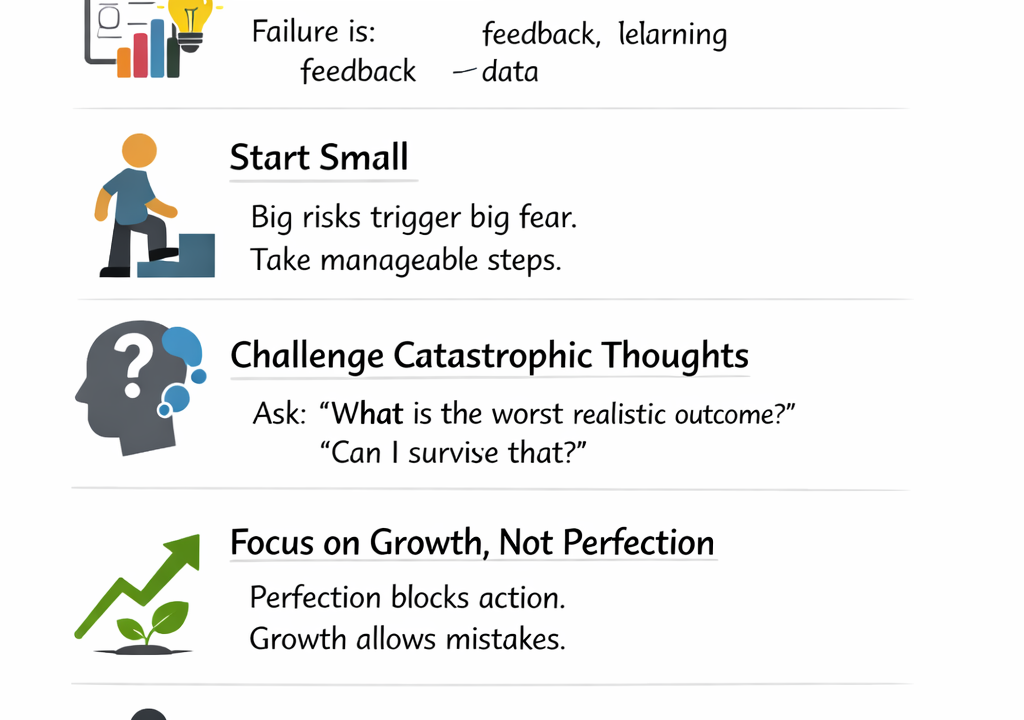
2. Redefine Failure
Failure is:
- Feedback
- Data
- Learning
Not proof of worthlessness.
3. Start Small
- Big risks trigger big fear.
- Small actions build confidence.
- Take manageable steps.
4. Challenge Catastrophic Thoughts
Ask:
“What is the worst realistic outcome?”
“Can I survive that?”
Most fears are exaggerated.
5. Focus on Growth, Not Perfection
- Perfection blocks action.
- Growth allows mistakes.
6. Accept Discomfort
- Growth always feels uncomfortable.
- Discomfort doesn’t mean danger.
- It means progress.
7. Build Self-Compassion
- Treat yourself like a friend.
- Instead of harsh self-criticism, practice supportive thinking.