
Personality in psychology refers to the unique pattern of thoughts, feelings, and behaviors that make a person different from others. It explains why people behave differently in similar situations and how individual differences shape life experiences.
Personality is not just about appearance or external behavior. It includes internal mental processes, emotional tendencies, attitudes, habits, and ways of interacting with the world.
Table of Contents
ToggleWhat is Personality?
In simple words, personality is:
- The way a person thinks
- The way a person feels
- The way a person behaves
It is the overall pattern that remains relatively consistent over time.
Example:
- One person may be calm and patient.
- Another may be energetic and talkative.
- Someone else may be serious and organized.
These consistent patterns reflect personality.
Personality makes every individual unique.
Why Personality Matters
Personality plays an important role in almost every area of life.
It influences:
- Career choices
- Relationships
- Leadership ability
- Stress management
- Decision-making
Example:
- An extroverted person may enjoy public speaking.
- An introverted person may prefer independent work.
- A highly organized person may perform well in structured environments.
Understanding personality helps explain strengths, weaknesses, and behavioral patterns.
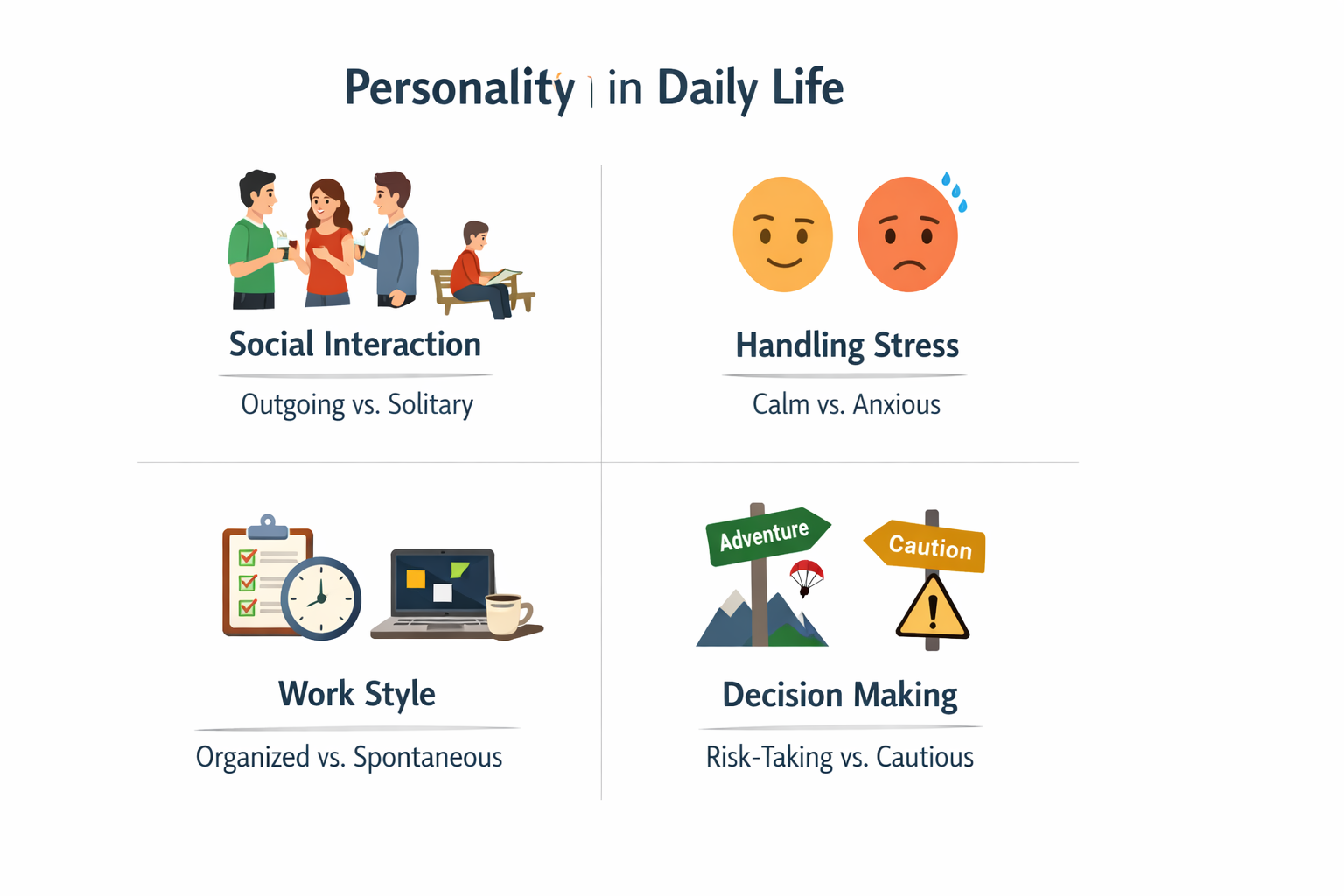
Personality in Daily Life
Personality is visible in everyday situations.
1. Social Interaction
Some people easily make friends and enjoy social gatherings. Others prefer small groups or solitude. These differences are due to personality traits.
2. Handling Stress
When facing problems:
- One person stays calm and logical.
- Another becomes anxious quickly.
This difference reflects personality style.
3. Work Style
- Some people are highly disciplined and punctual.
- Others are flexible and spontaneous.
These work habits are influenced by personality.
4. Decision Making
A risk-taking individual may choose adventurous activities, while a cautious person avoids risk.
Personality vs Character (Basic Understanding)
Personality refers to the overall pattern of behavior and thinking.
Character refers more to moral and ethical qualities such as honesty or integrity.
Personality describes “how a person behaves.”
Character describes “how morally good a person is.”
Personality is the unique and relatively stable pattern of thoughts, emotions, and behaviors that define an individual.